Feeds:
Posts
Comments

Force Ten Weather
.

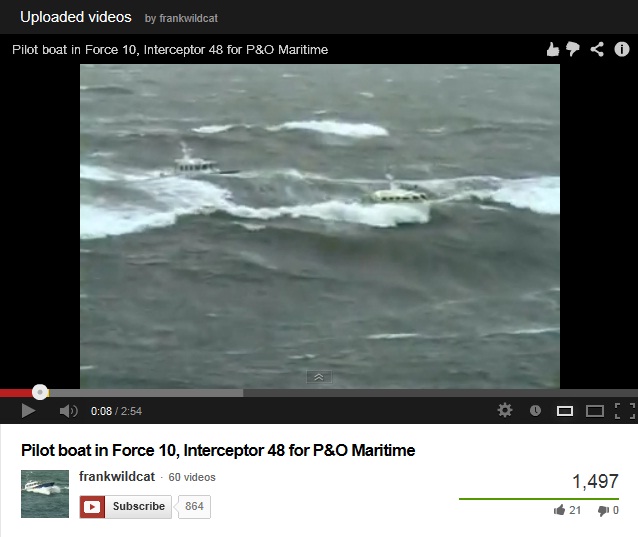
Next time you think you’d like to take the boat out, but you take a look out the window, and think it’s a bit breezy, and then you take a look at the sea, and you are sure you just saw a whitecap, and then you think about docking the boat back in the Marina when the wind is up, and you say well it’s just too rough to go out.

Think of these guys !

Click this link for the Video.

Safehaven Marine

This is a Boat Builders Sea Trial.

When I did an acceptance Sea Trial of my last boat, the builder gave every reason (excuse) in the world as to why “I did’nt want to take her out through the Seaway for a Sea “Sea Trial”

It will get salty !
.

These Pilot boats look very Salty in more ways than one.


From SCMP.

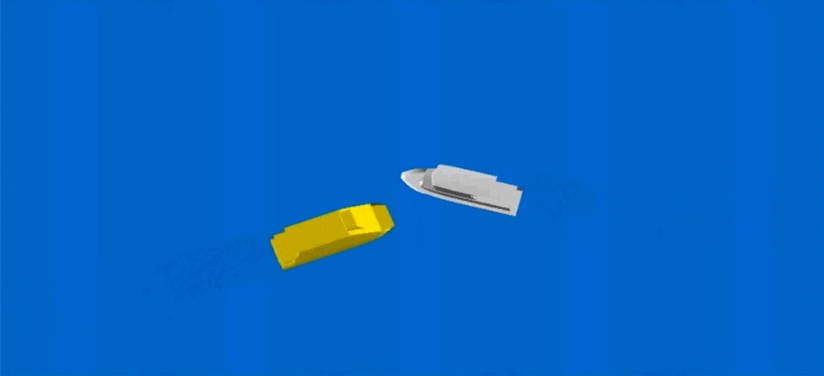
See video simulation prepared by naval architect Dr Neville Anthony Armstrong, the expert appointed by the Comission of Enquiry into the sinking of the Lamma IV, illustrating the impact and angle of the collision of the two ferries on 1st October 2012.

Lamma IV - Sea Smooth Collision Animation

Follow this link to watch the animation on YouTube.

.


From ABC News.

US Navy to Dismantle Ship Stuck on Philippine Reef
MANILA, Philippines January 30, 2013 (AP)
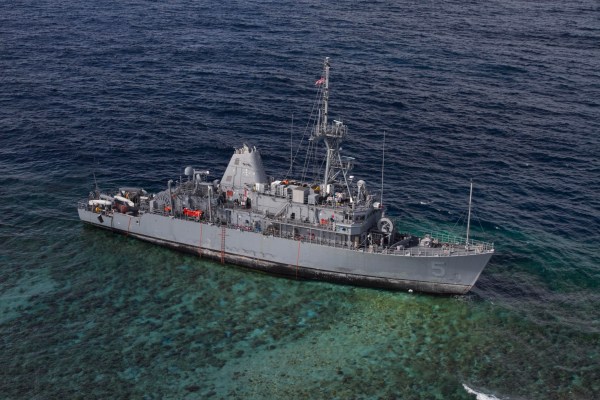
Guardian

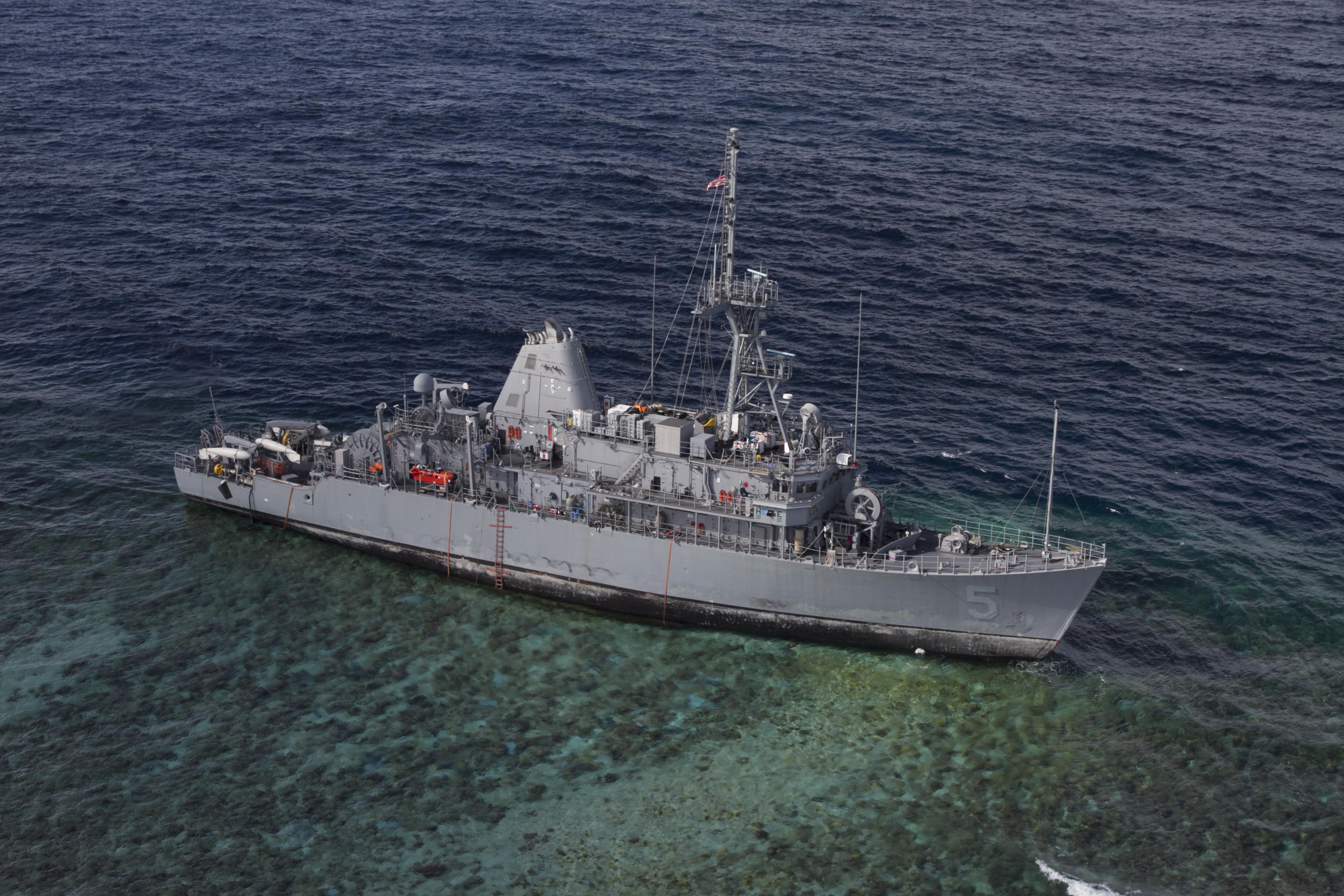
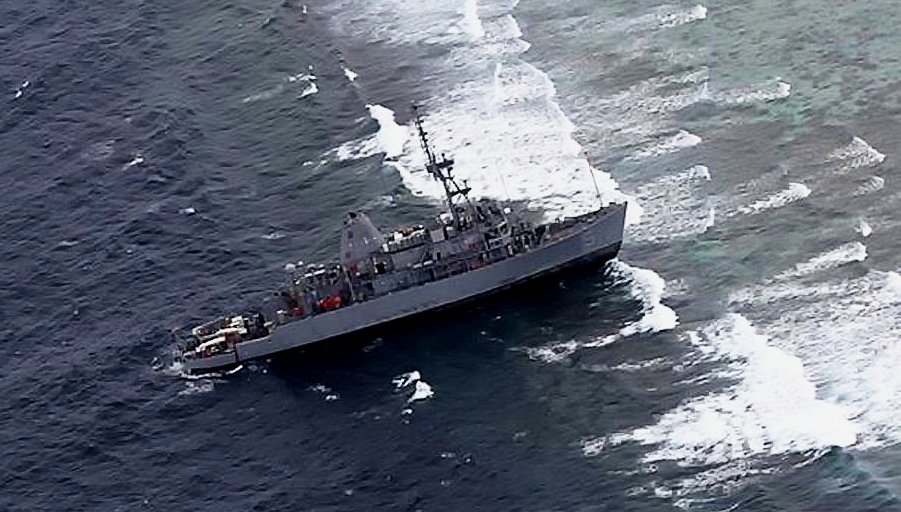
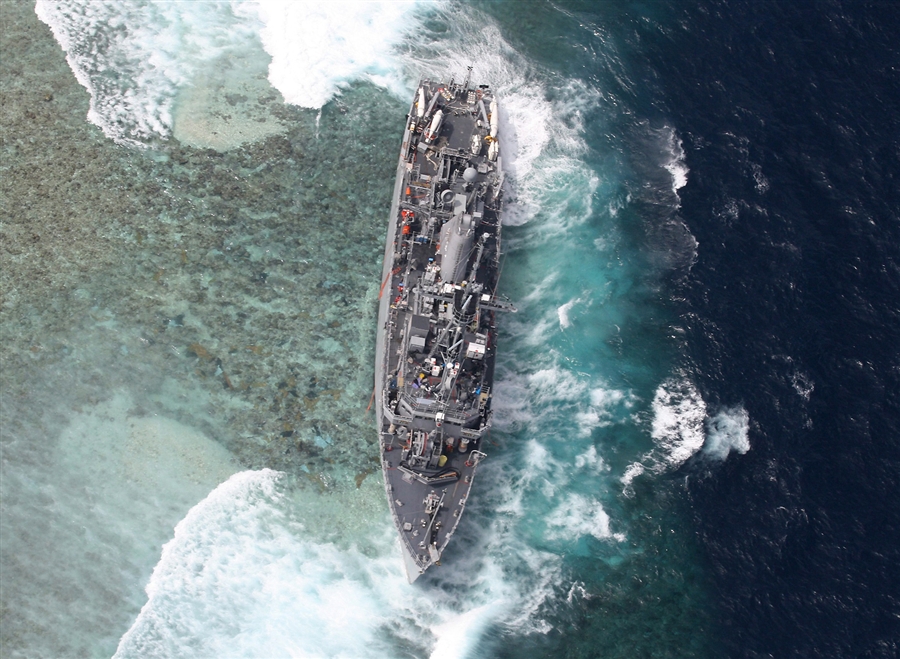
The U.S. Navy said Wednesday that it would dismantle a minesweeper that ran aground on a coral reef in the Philippines after carefully studying all options on how to remove the damaged ship.

Navy spokesman Lt. Cmdr. James Stockman said dismantling the USS Guardian was determined to be the solution that would involve the least damage to the Tubbataha Reef, a protected marine sanctuary where the ship got stuck Jan. 17.

He said the Philippine coast guard was reviewing the plan, but gave no other details.

The Navy had said previously that the Guardian would be lifted by crane onto a barge and taken to a shipyard, but apparently the damage was too extensive and it will have to be cut up and removed in pieces. Stockman gave no time frame for the operation.

The grounding caused no casualties to the ship’s 79 crew and officers, who were taken off the vessel after it crashed into the reef in shallow waters. The ship began listing and taking on water through holes in the wooden hull. The Navy’s support vessels siphoned off remaining fuel and salvage teams removed heavy equipment and hazardous material.

The Navy is investigating the incident, which caused Philippine government agencies and environmentalists to express concern about the extent of damage to the coral reef.

Philippine President Benigno Aquino III said last week that the U.S. Navy must explain how the ship got off course. He said the Navy would face fines for damaging the environment.

Rear Adm. Thomas Carney, commander of the Navy’s Logistics Group in the Western Pacific, told reporters last week that the investigation would look into all the factors that may have led to the grounding, including a reported faulty digital chart, sea conditions, weather and the state of the ship’s navigational equipment.

The Navy and the U.S. ambassador to the Philippines, Harry K. Thomas, have apologized for the grounding and promised to cooperate with its close ally.

.
From National Post

$277M USS Guardian is a complete loss: Navy plans to dismantle ship that ran aground in Pacific

On Reef - Salvage

HONOLULU — The U.S. Navy plans to dismantle a minesweeper that ran aground on a coral reef off the Philippines because the ship is a complete loss and because removing it intact would cause more damage to the reef and the ship’s hull, a spokesman said Wednesday.

There’s also a chance the USS Guardian might break up or sink if crews tried to remove it without taking it apart first, U.S. Pacific Fleet spokesman Capt. Darryn James said.

Limiting damage to the coral, which is part of a national marine park, is important to the Navy, James said.

“We really do care about being good stewards of the environment,” he said by telephone from Pacific Fleet headquarters in Pearl Harbor.

The Navy has presented the ship removal plan to the Philippines, which is reviewing it.

“We’re working very closely with the Philippine coast guard, with their navy and their government personnel. We’ve been grateful for their support as we all work together to remove Guardian and minimize further damage to the reef,” James said.

It’s expected to take over a month to dismantle the Guardian, which ran aground before dawn on Jan. 17.

Crews have already removed 15,000 gallons of fuel from the ship. They’ve also taken off hundreds of gallons of lubricating oil and paint. They’ll be removing human wastewater and other materials that could harm the environment, James said.

From the SCMP.

f04_06749528

Lack of watertight door sank Lamma IV, inquiry told
Naval architect also tells hearing there wasn’t enough time for crew to evacuate passengers

The Lamma IV would still be afloat with two gashes created by the Sea Smooth if there was a watertight door between its compartments, the commission of inquiry into the October 1 ferry collision heard.

Naval architect Dr Anthony Armstrong also came to the conclusion, based on computer projections, that the deck at the stern of the Lamma IV started to go below the water 96 seconds after its collision, and that it took eight seconds for the vessel to tilt from seven degrees to 70 degrees, with the stern hitting the seabed, and settling into the mud. In total it only took around 118 seconds from the collision, for the Lamma IV to rest at 70 degrees.

“[There is] certainly not enough time in which the crew would have been able to organise evacuation from the ship,” the commission-appointed expert witness said.

The bow of Sea Smooth had created two gashes on Lamma IV’s hull during the collision – one in its engine room and the other in the tank room.

Armstrong found that the stern of Lamma IV would almost be submerged, but that the vessel would remain afloat if just those two compartments were flooded.

Lamma IV - Hull Damage

The second gash was made by the large kinetic energy generated by the high speed of the Sea Smooth, Armstrong said.

But a large opening on the bulkhead between the tank room and its adjacent steering gear compartment led to the flooding of the third compartment, which contributed to the sinking of the vessel, Armstrong’s calculations showed.

According to the original drawings of the ship when it was built, a watertight door was meant to be fitted at the opening. But shipbuilder Cheoy Lee had earlier argued that it was just a mistake made by an outsourced designer.

Further calculations by Armstrong showed that even when the ship was newly built in 1996, Lamma IV would have sunk if the watertight door was not installed, regardless of the installation of a 8.25-tonne ballast at the stern two years later.

The Australian expert also said whether or not Sea Smooth had reversed after the collision would make no difference to the flow of water into the hull of Lamma IV because the bow of the Sea Smooth had been broken and left inside Lamma IV.

Some Lamma IV passengers who testified earlier said they felt the engine restarting and thought the other vessel was backing out.

But Armstrong said if that was the case, it must have happened within 10 seconds as Lamma IV was sinking quickly. He said the engine sound could have come from the flooding of Lamma IV’s engine. He believed the collision bulkhead at the bow of the Sea Smooth stopped it from penetrating further into Lamma IV.

The hearing continues today.

Meanwhile, the seven crew members of the two vessels were expected to have their bail extended for another month when they report to police today, pending a prosecution decision by the Department of Justice, a police officer said.


image-1

Source Wikipedia.
On 17 January 2013 following a port call and fuel stop in Subic, Guardian proceeded across the Sulu Sea and entered the Tubbataha Reefs Natural Park. After appearing on Park radar, at approximately 0400 hours local time Guardian was radioed a warning by park officials that the vessel had entered a restricted area. Park officials claim their lawful warning was met with disregard by Guardian, which radioed back to “bring [their] complaint to the US Embassy.” Shortly thereafter, the captain of the USS Guardian ran his vessel aground on Tubbataha Reef, about 130 kilometres (70 nmi) south east of Palawan in the Philippines. At the time of the accident the ship was travelling from Subic Bay in the Philippines to another port. The extent of any damage to the reef is unknown, but there is no evidence that fuel oil is leaking; damage to the reef has been estimated at 10 meters by the World Wide Fund for Nature Philippines. The U.S. Navy evacuated all 79 crew members from the minesweeper to the USNS Bowditch and MV C Champion on 18 January. On January 19, an assessment team was deployed would plan and execute the vessel’s extraction. On January 20, 2013, the Navy Times reported the ship is taking on water in multiple places and is experiencing a slight list to port.

pb-130120-guardian-cannon_photoblog900a

The comments in the article of the Park Rangers on the Reef calling the USS Guardian by Radio reminded me very much of the following………Click the picture below to play the Video……

.

USS Guardian

.


28 December 2012

MPA decommissions Singapore’s first Port Operations Control Centre

Following the commissioning of its new Port Operations Control Centre (POCC) at Changi Naval Base in July 2011 and the re-commissioning of its upgraded POCC at PSA Vista in September 2012, the Maritime and Port Authority of Singapore (MPA) today officially decommissioned its POCC at Tanjong Pagar Complex (POCC-TPC).

Today’s decommissioning of POCC-TPC marks the retirement of Singapore’s first POCC after more than 28 years of faithful service in ensuring navigational safety of vessels in the Singapore Strait and Singapore’s port waters.

First commissioned on 1 May 1984, POCC-TPC initially used VHF radios to manage vessel traffic in Singapore until the first radar based Vessel Traffic Information System (VTIS) was installed in 1990. The VTIS allowed POCC officers to see the positions of vessels in real time on a screen and provide navigational assistance to these vessels. In 2000, POCC-TPC was upgraded with a new VTIS that was able to track up to 5,000 vessels.

The decommissioning ceremony was officiated by MPA’s Chief Executive, Mr Lam Yi Young, and was attended by POCC officers who served at POCC-TPC over the years, including those who have since retired from service. Speaking at the ceremony, Mr Lam paid tribute to the pioneers who were instrumental in setting up POCC-TPC and the many POCC officers who faithfully kept watch at POCC-TPC round the clock from 1984 to 2012, ensuring the safety of the thousands of vessels that call at the Port of Singapore each year.

MPA’s new POCC at Changi Naval Base and upgraded POCC at PSA Vista are fully operational and manned round the clock to ensure navigational safety of vessels in the Singapore Strait and Singapore’s port waters. The two centres are fully integrated to serve as mutual back-up to each other. Each centre is independently equipped and has the capability to assume control of all operational areas in times of an emergency affecting the other centre.


America its time to act


The captain of Lamma IV had half a minute to make a sharp starboard turn to avoid crashing into Sea Smooth, an inquiry commission is told

Saturday, 15 December, 2012, 12:00am

Simpson Cheung simpson.cheung@scmp.com

The Lamma sea tragedy could have been avoided had the skipper of the Lamma IV made a bold turn to starboard (right) and reduced speed 30 seconds before the collision, a commission of inquiry was told yesterday.

A survivor on the sunken Lamma IV said he felt another strong vibration moments after the collision, and believed Sea Smooth had restarted its engine and dragged Lamma IV before the ship began to sink.

.

30 seconds

.

Giving evidence on his investigation into the disaster that killed 39 people on October 1, British maritime expert Captain Nigel Pryke said Chow Chi-wai, 56, the captain of Hongkong Electric ferry Lamma IV, first saw the Hong Kong & Kowloon Ferry’s Sea Smooth approaching half a minute before the collision, at 20:19:47.

He said if the skipper had made a bold turn to starboard and reduced speed, or if the captain of the Sea Smooth had turned right, the tragedy would have been avoided.

“Unfortunately, that is only 30 seconds from collision. So there’s not much time,” Pryke said.

He said Chow should have made at least a 22.5-degree turn to starboard at that point, but turned only 13 degrees, while Sea Smooth made a 16-degree turn to the port side (the captain’s left) – the wrong direction.

“If Sea Smooth had carried on doing exactly what she was doing, and Lamma IV had done as I suggest, the collision would have been avoided,” he said. “But clearly it was far easier for Sea Smooth to avoid the collision than it was for Lamma IV.”

Although Lamma IV was constrained by rocks, Chow could still have made a turn at full speed one minute before it might have been compromised by depth.

“Even at that very last moment, [Sea Smooth] could have altered course to starboard and avoided the collision. It’s a tragedy. I don’t understand why it didn’t happen,” he said.

Survivors Chan Kin-yan and Wong Tai-wah – passengers on the Lamma IV – told the commission that they felt the vessel accelerate 30 seconds before the collision. Wong said he could not feel the boat turning before the crash.

But Pryke said radar data showed Lamma IV and Sea Smooth were making slight turns 30 seconds before collision.

“I don’t want to be too harsh on [Chow] … I feel he did nothing significantly different than any of his colleagues would have done,” he said. “I do feel some sympathy for [him], because I believe he is probably a very genuine coxswain and he was not helped by the safety management system that surrounded him.”

Pryke said he had only received an account of the accident from Chow and not from Sea Smooth captain Lai Sai-ming. “I am sure everybody knows why,” he said, without elaborating.

Only one sailor from the four-person crew of Sea Smooth is understood to have testified to police. When asked outside the hearing why Lai did not, his lawyers refused to comment. “You will know later,” one said.

The commission scheduled for next month the cross-examination of Pryke by Charles Sussex SC, for the owner and crew of Sea Smooth, pending expert reports.

Survivor Wong, a driver whose wife was among the 39 dead, told the commission he had heard a second sound 30 seconds after the crash and felt Lamma IV was being dragged by some external force. He believed that Sea Smooth’s engine had started again.

“The second bang was so strong that all the seats were dislodged and also the people as well,” he said, adding that the Lamma IV then began to tilt and quickly sank.

Sea Smooth continued to sail to the Yung Shue Wan pier in Lamma as water began to flood in, the commission heard. The hearing continues on Monday.

Reproduced from South China Morning Post. Original here


Both Lamma ferry disaster captains broke rules, inquiry told

 British maritime expert says Sea Smooth captain made decision that was ‘worse than doing nothing’ , while both skippers breached safety rules

Friday, 14 December, 2012, 12:00am

Simpson Cheung simpson.cheung@scmp.com

Both captains broke safety rules in the Lamma ferry disaster, but the skipper of Sea Smooth made a wrong turn that was “even worse than doing nothing”, the commission of inquiry was told yesterday.

British maritime expert Captain Nigel Pryke said: “The most significant cause of the collision was poor navigation by the coxswain of Sea Smooth. There were also contributory failings by the coxswain of Lamma IV.”

His report suggested that Sea Smooth captain Lai Sai-ming allegedly made seven breaches of the International Regulations for Preventing Collisions at Sea, while Chow Chi-wai, skipper of the Lamma IV, made three.

A contributing factor was that Lai was alone on the bridge when the collision happened, having allowed three other crew members to take a rest without instructing them to keep a lookout, the report said. Chow also failed to read the radar.

According to the regulations, when there is a risk of a head-on collision between two power-driven vessels, both should alter course to starboard.

But Sea Smooth made a 16 degree turn to port – “a serious contravention” of the rule – and did not alert Lamma IV. “[This] is even worse than doing nothing,” Pryke said.

Lamma IV made a 13 degree turn to starboard, but rocks near Shek Kok Tsui – the northwestern tip of Lamma – limited the space for it to make the turn.

Chow previously stated that he had given one short blast on his whistle, indicating he was altering course to starboard. But Pryke said he found no evidence to indicate this.

Pryke added that he did not believe “that, at this late stage, the sound signal of one short blast would have had any effect on preventing the collision”.

Chow also told police the lights of vessels at anchor nearby affected his ability to observe the approach of Sea Smooth.

By the time he saw a vessel approaching at speed, it was only 500 to 600 metres ahead, two to three minutes after he left the typhoon shelter.

But Pryke said nearby lights should not have contributed to the collision.

He added: “[Chow] ought to have looked at his radar before he left the berth, and as he was creeping out of the typhoon shelter he should not have increased to full speed … he should have been doing maybe half-speed.”

Pryke also said both vessels were travelling at very high speed – Sea Smooth at 24.3 knots and Lamma IV at 11.5 knots – meaning there was a combined speed of 36 knots at the time of collision.

“Neither vessel was fully aware of the other’s intentions, and the combined speed of approach allowed little time for appraisal and to take action,” the report said.

Pryke also said Lamma IV did not carry a very high frequency radio and was unable to communicate with the Marine Department’s vessel traffic centre. “It is just plain wrong,” he said.

The hearing continues today. Survivors from the Lamma IV are due to testify next week.

Reproduced from South China Morning Post. Original here


Lamma ferry disaster captains ‘had 3 minutes to avoid crash’

Commission of inquiry into disaster that left 39 dead is told ferry Sea Smooth and Lamma IV should have been clearly visible to each other

Thursday, 13 December, 2012, 12:00am

The captains of the two vessels that collided off Lamma Island killing 39 people should have been able to see each other’s ships three minutes before they crashed, the commission of inquiry into the tragedy was told yesterday.

Counsel for the commission Paul Shieh Wing-tai SC said that according to the Observatory, visibility was clear and the wind was light at the time of the crash – 8.20pm on October 1 – and the weather and tide were not affecting navigation.

Shieh was making his opening remarks at the start of the main hearing by the commission. A preliminary hearing was held last week.

By the time the Hongkong Electric boat Lamma IV had cleared its berth and was under way, it was within two nautical miles of the ferry Sea Smooth.

“By 8.17pm, they should have been within sight of one another by radar and visually,” he said.

An animation from radar data, played at the hearing, showed that Sea Smooth – with four crew and at least 62 passengers – was travelling at 24 nautical miles an hour about 20 seconds before the collision.

Lamma IV, with three crew and 124 passengers, was travelling at 11.5 nautical miles an hour.

Radar diagrams presented to the commission showed that the routes taken by the two vessels during the period of the crash overlapped three times.

Further analysis of the radar data is expected by other witnesses, including a British expert.

But the accuracy of the data was questioned by James McGowan SC, representing the owner and crew of Lamma IV.

The commission heard that the Sea Smooth disengaged from the Lamma IV after the crash, leaving part of its hull inside the stricken vessel, which sank in less than five minutes.

The first emergency call was made by a passenger on Lamma IV one minute after the crash.

Two minutes later, the captain of Sea Smooth informed the Marine Department’s Vessel Traffic Centre in Sheung Wan by radio.

“My [vessel] collided with a Hongkong Electric vessel [near] the Lamma Patch,” Captain Lai Sai-ming said in an audio clip played yesterday.

The centre’s log book, presented at the hearing, showed the crash was noted at 8.25pm and that a rescue was under way.

The department’s assistant director in port control, marine police and the fire services had been informed.

Six minutes after the crash, at 8.26pm, the Sea Smooth captain reconnected with the control centre. He said: “Water is flooding into the vessel’s port, its starboard side.

“Water is flooding into the vessel. I am now taking passengers to [Yung Shue Wan pier]”.

The hearing continues today.

Reproduced from South China Morning Post. Original here